

A refrigerator is never completely silent, but it also shouldn’t be the loudest thing in your home. Below is a clear guide to the most common fridge sounds, what they usually mean, and when you should fix it yourself or call a technician.
Normal vs. problem sounds
Normal sounds (usually nothing to worry about):
- Soft humming when the compressor runs
- Light whooshing or air movement inside the cabinet
- Occasional gurgling from refrigerant or defrost water
- Single quiet click when the compressor starts or stops
Warning sounds (need attention):
- Constant loud buzzing or grinding
- Repetitive clicking every few seconds
- Knocking, banging, or loud rattling
- High-pitched squealing or whistling
If the sound is new, gets worse over time, or comes with poor cooling, treat it as a problem.
What different noises usually mean
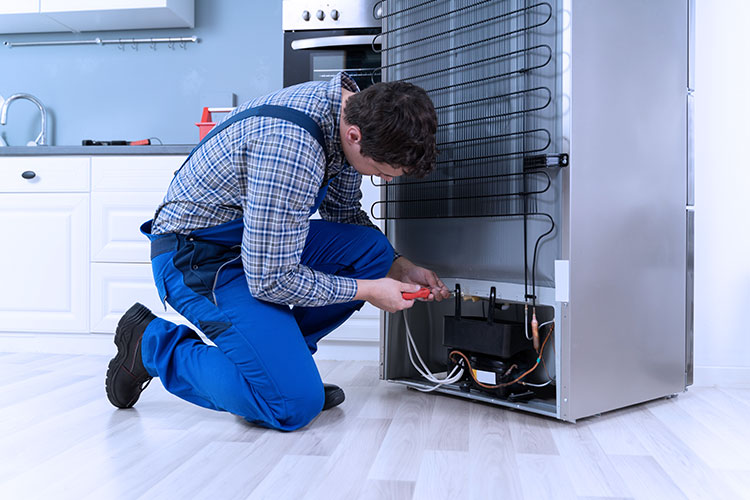
1. Loud humming or buzzing
Likely causes:
- Compressor working under heavy load
- Dirty condenser coils
- Condenser fan motor struggling or worn
- Fridge pushed tight against the wall, blocking airflow
What to do:
- Pull the fridge away from the wall to improve ventilation.
- Unplug the fridge. Carefully clean dust from the coils and condenser fan area.
- Make sure nothing (cardboard, bags, debris) is touching the back or bottom.
If the buzzing stays loud after cleaning and spacing, the compressor or fan motor may be failing and needs professional diagnosis.
2. Clicking sounds
Likely causes:
- Start relay trying and failing to start the compressor
- Overload protector tripping due to high temperature or failing compressor
- Defrost timer or control board switching cycles (short, occasional click – usually normal)
What to do:
- If clicking is occasional and quiet, it’s often just normal switching.
- If it clicks every few seconds or minutes, and the fridge is not cooling well, the compressor circuit is likely in trouble.
In that case, avoid repeated restarts and contact a technician. This is not a safe DIY repair.
3. Knocking or banging
Likely causes:
- Fridge not level and rocking slightly
- Items on top or touching the fridge vibrating and hitting the cabinet
- Loose compressor mounting or internal mechanical issue
What to do:
- Remove items from the top of the fridge and anything touching the sides.
- Check the leveling legs at the front. Adjust them so the fridge is stable and slightly tilted back.
- Gently push on the cabinet corners. If you hear metal clunking from the back or bottom, the compressor or its brackets may be loose.
If knocking comes specifically from the compressor area, call a specialist. Ignoring it can lead to complete failure.
4. Rattling or vibrating
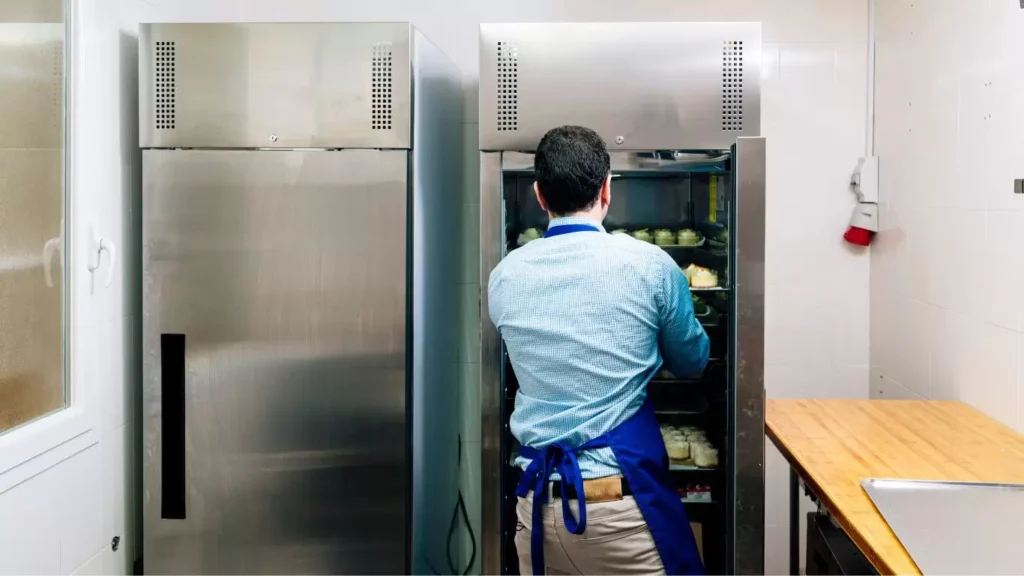
Likely causes:
- Drain pan or bottom cover loose
- Copper tubes touching each other or the cabinet
- Condenser fan hitting dust, ice, or a loose piece of plastic
What to do:
- Unplug the fridge.
- Remove the lower rear cover and inspect the drain pan. Make sure it sits firmly.
- Look for tubes or wires touching metal and gently separate or pad them.
- Check the fan blades for debris and spin them by hand. They should move freely without scraping.
If the fan motor is noisy even when clean and clear, it probably needs replacement.
5. Hissing, sizzling, or crackling

Likely causes:
- Defrost cycle: ice on the evaporator melting and dripping on the heater (often normal)
- Light hissing from refrigerant flow (also normal if quiet)
What to do:
- If the sounds happen for a short time and stop, especially during automatic defrost, this is usually normal.
- If hissing is very loud or combined with a chemical smell or visible frost build-up in one area, turn off the fridge and call a technician. That can indicate a refrigerant issue.
6. Gurgling or water sounds
Likely causes:
- Refrigerant moving through the system
- Melted defrost water draining into the pan
- Water supply to ice maker filling
What to do:
Most soft gurgles and water trickling noises are normal.
Check only that:
- The drain line is not visibly blocked
- There is no water leaking onto the floor
- The water supply hose is not kinked or vibrating against the wall
If you see leaks or strong odors, the drain, valve, or line needs service.
Quick safety checks before you do anything
Before any inspection or cleaning:
- Unplug the refrigerator.
- Avoid touching live wires or sealed system parts.
- Do not pierce, cut, or bend refrigerant lines.
- If you smell burning, see smoke, or the breaker trips – leave it off and call a technician immediately.
For persistent noise issues or suspected part failure, it’s safer and cheaper long-term to use a qualified fridge repair service instead of guessing and replacing parts at random.