

If your clean laundry comes out smelling like a damp basement, the problem usually isn’t the detergent—it’s your washer. Front-load machines are efficient, but they trap moisture and soap residue, which makes them a perfect place for mold and mildew.
Below is a clear, practical guide to get rid of those odors and keep them from returning.
Why Front-Load Washers Start to Smell
Front-load washers tend to smell bad for a few simple reasons:
- Trapped moisture. The door seal and tight design hold in humidity.
- Soap and softener buildup. Too much detergent or non-HE products leave a sticky film.
- Lint and dirt. Residue from dirty clothes settles in the gasket, drum, and hoses.
- Cold washes only. Low temperatures don’t kill bacteria or break down residue.
- Door always closed. No air flow = a warm, damp environment where mold thrives.
The good news: in most cases, you can fix the smell yourself with basic cleaning.
How to Tell If Mold Is Already Inside Your Washer
Look for these signs:
- A musty or sour smell when you open the door—even when the washer is empty
- Black, dark green, or slimy spots on the rubber door gasket
- A film or sludge in the detergent drawer
- Clothes that smell “wet” or “stale” right after a wash cycle
If you notice one or more of these, it’s time for a deep clean.
Step-by-Step: How to Remove Musty Odors from a Front-Load Washer
You’ll need:
- Microfiber cloths or paper towels
- An old toothbrush or small brush
- White vinegar or a washing machine cleaner
- Baking soda (optional)
- Mild dish soap
- Gloves (recommended if mold is heavy)
Always check your washer’s manual before using bleach or strong chemicals. When in doubt, use white vinegar and a dedicated washer cleaner.
Step 1. Clean the Rubber Door Gasket
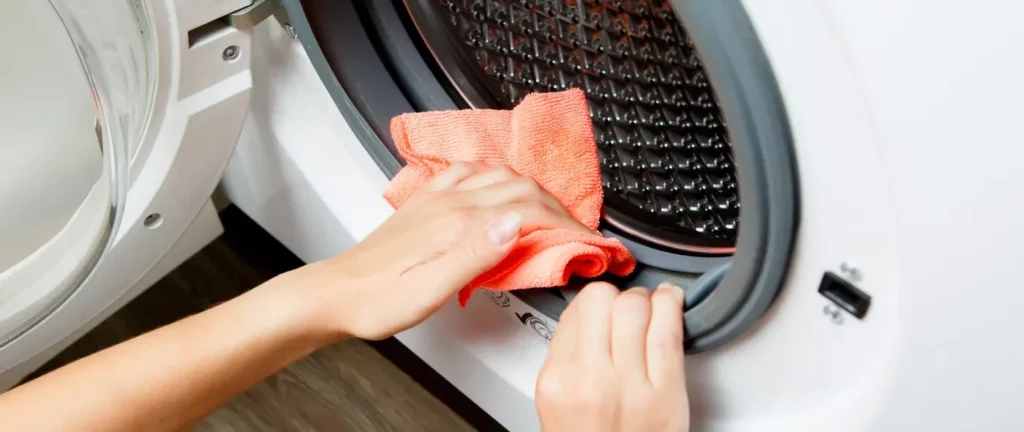
The door seal is usually the main source of the smell.
- Open the washer door and gently pull back the rubber gasket.
- Remove loose debris: coins, hair, lint, and dirt.
- Mix warm water with a little dish soap or vinegar.
- Wipe under the folds of the gasket thoroughly with a cloth.
- For visible mold, scrub gently with a brush.
- Dry the gasket with a clean cloth.
If the gasket is cracked, torn, or heavily stained, it may need replacement by a professional.
Step 2. Wash the Detergent Drawer
Detergent and softener residue trap moisture and grow mold.
- Pull out the detergent drawer. Most can be fully removed by pressing a small release tab.
- Soak it in warm, soapy water.
- Scrub each compartment and corner with a brush.
- Wipe inside the drawer cavity in the machine (this area is often very dirty).
- Rinse and dry the drawer, then reinstall it.
Step 3. Run a Hot Cleaning Cycle
Now you want to disinfect the inside of the washer.
Option A – Vinegar + Baking Soda (if allowed by the manual):
- Pour 2 cups of white vinegar into the detergent compartment.
- Sprinkle ½ cup of baking soda directly into the drum.
- Run the hottest, longest cycle with an empty machine.
Option B – Commercial Washer Cleaner:
- Follow the instructions on the cleaner packaging.
- Use the “drum clean”, “tub clean”, or a hot cycle if your washer has it.
This step helps break down residue inside the drum and internal parts.
Step 4. Clean the Drain Pump Filter
If your model has an access door at the bottom front, there’s likely a drain filter behind it.
- Turn off and unplug the washer.
- Place a shallow pan or towels under the access door.
- Open the door and slowly unscrew the filter cap—water may come out.
- Remove the filter and clean out lint, hair, and debris.
- Rinse the filter under warm water.
- Wipe the filter housing, then reinstall the filter securely.
A clogged drain filter can cause standing water, which also leads to bad smells.
Step 5. Dry Everything and Let the Washer Breathe
Once cleaning is done:
- Wipe the drum, gasket, and door glass dry.
- Leave the door and detergent drawer slightly open to let air circulate.
- Run a quick rinse cycle (optional) to flush any leftover cleaner.
At this point, the musty smell should be significantly reduced or gone.
How to Prevent Washer Odors from Coming Back

A few simple habits will keep your front-load washer fresh:
- Use HE detergent and less of it. Too much soap = more residue.
- Avoid constant cold washes. Mix in occasional hot or warm cycles.
- Leave the door open after each load so the interior can dry.
- Wipe the gasket weekly. Quickly dry the rubber seal and remove any visible dirt.
- Clean the detergent drawer monthly. Rinse and scrub away buildup.
- Run a cleaning cycle once a month. Use vinegar or a washer cleaner on a hot cycle.
- Check the drain filter regularly. Every 1–3 months, depending on use.
These steps take just a few minutes but save you from dealing with strong odors later.
When It’s Time to Call a Professional
DIY cleaning works in most cases, but you should consider professional help if:
- The smell remains strong even after a deep clean
- The washer doesn’t drain properly or leaves water in the drum
- You see error codes, leaks, or unusual noises
- The door gasket is damaged and needs replacement
- There is visible mold behind panels or in places you can’t safely access
A technician can inspect internal hoses, the drain pump, and other components that are not user-serviceable.
Need Help in Brooklyn? Get Fast Washer Repair
If you’re in Brooklyn and your front-load washer still smells bad—or you suspect a deeper problem—schedule a professional inspection. A qualified technician can diagnose drainage issues, replace a damaged door gasket, and make sure the machine is safe and mold-free.
Book reliable washer repair in Brooklyn to get your washer back to working (and smelling) like it should.