

If your dryer suddenly needs two or three cycles to dry a normal load, something is wrong. The good news: in many cases, you can find and fix the cause yourself with a few simple checks before calling a technician.
Use this step-by-step guide to quickly narrow down the problem and decide whether you really need professional dryer repair.
1. Start With the Basics: How You Use the Dryer
Before assuming a major breakdown, make sure the issue is not caused by everyday habits.
Check load size
- A drum packed full of towels or bedding will always dry slowly.
- As a rule, the drum should be no more than about ¾ full when the clothes are wet.
- Very small loads can also confuse moisture sensors and make cycles run longer than expected.
Check fabric mix
- Heavy items (towels, jeans, hoodies) dry slower than light synthetics and shirts.
- If you mix heavy and light fabrics, the dryer may keep running until the heaviest items are dry.
- Try drying heavy items separately from light ones and see if drying time improves.
Check your cycle and temperature
- “Air Fluff” / “No Heat” will never dry clothes, only tumble them.
- “Delicate” or “Low Heat” will always take longer than “Normal” or “High Heat”.
- Make sure you are using a heated cycle that matches the type of fabric you’re drying.
If load size, fabric mix and settings are all correct, move on to the most common technical cause: restricted airflow.
2. Clean the Lint Filter Properly
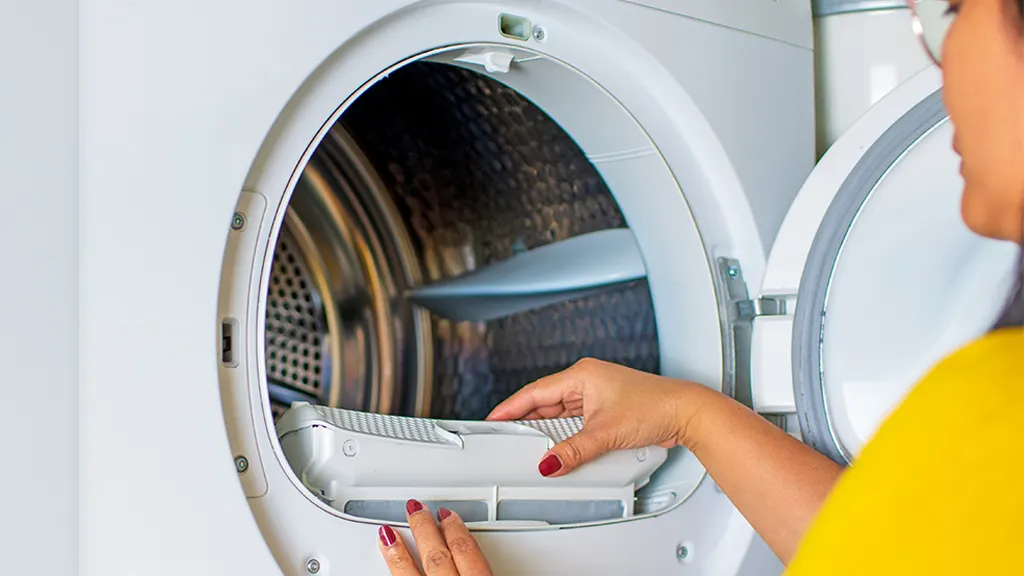
A clogged lint filter is one of the simplest reasons a dryer takes too long to dry.
Do this every time you dry:
- Remove the lint screen from its slot.
- Gently peel off the lint and throw it away.
- If you use a lot of fabric softener, wash the screen occasionally in warm water with a small amount of dish soap, then let it dry completely. Softener can leave an invisible film that blocks airflow.
Why it matters:
- Poor airflow over the heater means lower drying temperature and longer cycles.
- Excess lint also increases the risk of dryer fires.
If the lint filter is clean and your dryer still struggles, the restriction might be further down the vent system.
3. Inspect the Vent Hose and Outside Vent
If hot, moist air cannot leave the dryer, it will keep tumbling clothes for a long time without drying them properly.
Check the vent hose
- Pull the dryer slightly away from the wall.
- Make sure the hose is not crushed, sharply bent, or kinked.
- If the hose is very long and snakes around the room, consider shortening the path. Shorter and straighter runs dry better.
- Look for visible lint buildup or damage to the hose.
Check the outside vent
- Go outside while the dryer is running on a heated cycle.
- Put your hand in front of the vent flap or grille. You should feel a strong flow of warm, moist air.
- If airflow is weak or you see lint blocking the vent, the duct may be clogged and needs cleaning.
Warning signs of a blocked vent:
- The dryer and laundry room feel unusually hot.
- The dryer exterior is very hot to the touch.
- You notice a burning or musty smell.
- Drying time keeps increasing over weeks or months.
If the vent is badly clogged and you are not comfortable cleaning it yourself, this is a good time to call a professional.
4. Make Sure the Dryer Is Actually Heating

Sometimes the tumble function works, but the heating system does not.
Quick heat check
- Start a normal cycle on “High Heat” with a few wet towels.
- Wait 5–10 minutes.
- Carefully open the door (avoid putting your face directly in front of the opening).
- Reach inside briefly and feel the air and the towels.
What you should see:
- Normal: air and towels feel clearly warm; moisture is slowly disappearing.
- No heat at all: air is room temperature; clothes remain completely wet after several minutes.
- Weak heat: slightly warm air, but towels stay very wet and the cycle takes much longer than usual.
If there is no heat or very weak heat, the issue may be with:
- Heating element (electric dryers)
- Gas burner, igniter or gas supply (gas dryers)
- Thermostats or thermal fuse
- Control board or temperature sensors
These are not “do it yourself” repairs for most people and are best handled by a qualified technician.
5. Check the Drum and Moisture Sensors
If your dryer heats and vents correctly but still runs forever or stops too early, the problem could be inside the drum.
Drum and airflow
- Make sure nothing is blocking the drum baffles (the fins inside the drum).
- Listen for unusual scraping or thumping sounds that could indicate objects stuck between the drum and housing.
Moisture sensor strips
Most modern dryers use two metal strips inside the drum (usually near the lint filter area) to detect moisture.
- If these strips are coated with fabric softener or detergent residue, the dryer may misread moisture levels, leading to very long or very short cycles.
- To clean them, turn off and unplug the dryer, then gently wipe the sensor area with a soft cloth dampened with a little rubbing alcohol. Let it dry and test again.
6. When It’s Time to Call a Professional

Stop and call a technician if you notice any of the following:
- Burning, melting or electrical smell
- The breaker or fuse keeps tripping when the dryer runs
- Gas smell (for gas dryers)
- Loud grinding, squealing or knocking noises
- The dryer drum does not turn at all
- You have already cleaned the lint filter and vent, but drying time is still much longer than before
Continuing to run a faulty dryer can be unsafe and may cause more expensive damage.
If you need expert help, especially with internal components like the heater, motor, sensors or control board, it is safer and faster to use a professional service. For residents who want качественный ремонт dryer repair by experienced technicians, you can schedule service through this page: dryer repair